

Is Botanical Anti-Aging Oil Worth It?
Last Updated: November 2, 2026
Quick Summary
A botanical anti aging oil is worth it when it is a water-free blend of carrier oils and plant extracts that supports hydration, barrier function and the look of fine lines. Choose one with dark glass packaging, botanical names on the label and no irritating essential oils, and use three to four drops on damp skin.
- Anhydrous formulas skip water, emulsifiers and preservatives so more of each drop nourishes skin.
- Bakuchiol is the plant-based retinol alternative, but its evidence base is smaller than retinol's.
- Rosehip oil oxidises quickly, so buy dark glass with a harvest date and store it cool.
- Carrier oils are used undiluted, while essential oils should be diluted to around 1-2% before use.
- Apply three to four drops to damp skin, press in, and follow with sunscreen in the morning.
Table of Contents
- What Makes a Botanical Anti Aging Oil Worth Using
- Bakuchiol Face Oil: The Plant-Based Retinol Rival
- Rosehip Oil for Wrinkles: What the Evidence Supports
- Natural Alternatives to Retinol Compared
- How to Use Face Oil in a Daily Ritual
- Choosing Your Botanical Anti Aging Oil
- Frequently Asked Questions
What Makes a Botanical Anti Aging Oil Worth Using
Not every oil in a pretty bottle earns a place on your shelf. A botanical anti aging oil is a concentrated blend of plant-derived oils and extracts formulated to support skin hydration, barrier function and the appearance of fine lines, and the best ones earn that label through what they leave out as much as what they put in.
At Orvica Botanics, we build every formula around one principle: water is not the hero here. What matters is the quality of the oils, the fatty acid profile, and whether the formula actually stays stable on your skin.
Why Water-Free Formulas Change the Equation
Most creams and lotions are mostly water, which is why they need emulsifiers and preservatives to hold together and stay safe. An anhydrous formula skips that entirely. The oils, butters and botanical extracts do the work directly, and the formula delivers more of what nourishes skin per drop.
That matters for ageing skin because the skin barrier weakens over time, losing moisture more readily. A well-made facial oil supports that barrier with fatty acids and antioxidants rather than sitting on top of it. It also means you are not paying for water.
Bakuchiol Face Oil: The Plant-Based Retinol Rival
Bakuchiol face oil is the closest thing the plant world offers to a retinol alternative, and it has become the ingredient most often recommended for anyone who finds retinol too irritating. Bakuchiol is a compound extracted from the seeds of the babchi plant and is used in skincare.
The honest caveat: the evidence base for bakuchiol is smaller than for retinol. It is promising, not proven at the same scale. For anyone who has tried retinol and given up, a bakuchiol face oil is a sensible next step.
Rosehip Oil for Wrinkles: What the Evidence Supports
Rosehip oil is a popular ingredient in natural skincare. Rosehip seed oil is rich in linoleic acid and vitamin A precursors.
Where rosehip falls short is stability. It oxidises faster than heavier oils, so sourcing and packaging matter enormously. A rosehip oil in a clear bottle left on a sunny shelf is a wasted purchase. Look for dark glass and a harvest date, and store it cool.
TGA guidance on cosmetic claims and ingredients
Natural Alternatives to Retinol Compared
Natural alternatives to retinol fall into a few broad camps, and they are not interchangeable.
Here is how the main options compare on what actually matters:
| Oil | Main Strength | Best For | Watch Out For |
|---|---|---|---|
| Bakuchiol | Firmness, fine lines | Retinol-sensitive skin | Smaller evidence base |
| Rosehip | Tone, texture | Dull, uneven skin | Oxidises quickly |
| Prickly pear seed | Barrier, antioxidants | Dry, reactive skin | Lighter than expected |
| Marula | Nourishment, elasticity | Mature, dry skin | Rich texture |
| Pomegranate seed | Antioxidant protection | Early ageing signs | Distinct scent |
What the Evidence Actually Supports
It helps to separate what topical botanical oils reliably do from what they are claimed to do.
Carrier Oils Versus Essential Oils
A distinction that catches many people out: the oils in this comparison are carrier oils, pressed from seeds, nuts or fruit, not essential oils. Carrier oils are used undiluted and are generally well tolerated. Essential oils are concentrated volatile plant extracts, are far more likely to irritate, and should be diluted to around 1-2% in a carrier oil before touching your face. If a product lists something like lavender oil, tea tree oil or citrus peel oil high on the ingredient list, treat it as a potential irritant rather than a botanical hero. Fragrance-free carrier-oil blends are the safer starting point for reactive skin.
Matching Oils to Skin Type and Sensitivity
Sensitive skin may prefer to start with a simple formula so it is easier to tell what works. If your skin reacts to everything, patch test on the inner arm for a few nights before going near your face.
ASCIA guidance on skin sensitivity and patch testing
How to Use Face Oil in a Daily Ritual
How to use face oil well comes down to timing and quantity. Apply three to four drops to damp skin after cleansing, warm it between your palms, and press it in rather than rubbing. Follow with sunscreen in the morning. At night, it can be your last step or layered under a moisturiser if your skin is very dry.
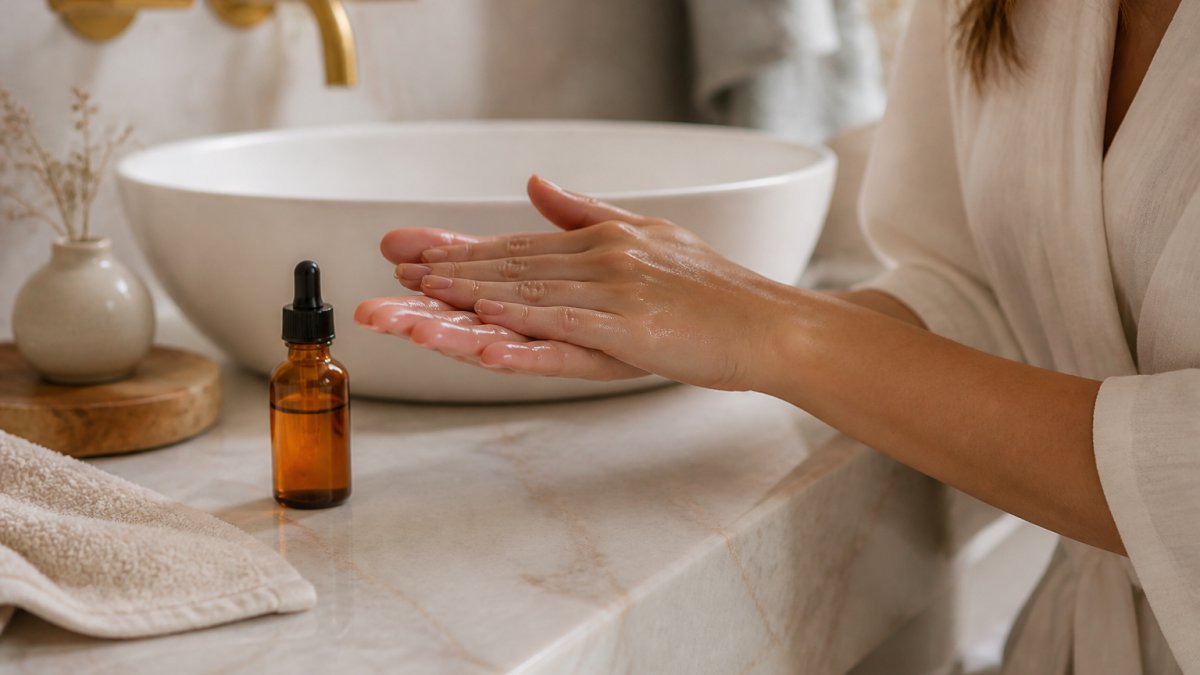
Watch out: using too much oil is the most common mistake. More does not mean better, and excess oil can leave skin looking greasy and clog pores. Start with three drops and adjust.
Choosing Your Botanical Anti Aging Oil
Choosing well means reading the label like a sceptic. Check whether the formula is anhydrous, whether the oils are listed with their botanical names, and whether the packaging protects the contents from light. A botanical anti aging oil worth buying will tell you what is in it and why.
Ingredient Quality and Sourcing
Look for the botanical name (for example Rosa canina for rosehip) rather than a vague "rosehip extract", and be wary of blends where the headline oil appears after preservatives or fragrance on the ingredient list.
How Much to Use and How It Fits Your Routine
Three to four drops is the usual amount for the full face and neck. Apply to damp skin after cleansing, warm between the palms and press in rather than rubbing. In the morning, oil goes before sunscreen, never instead of it, and you should wait a minute or two so the sunscreen sits evenly. At night, oil can be the last step or layered under a moisturiser if skin is very dry.
A Consistent Way to Compare Products
Our 24K Golden Glow Elixir combines bakuchiol and seabuckthorn with pure 24K gold in a water-free base. In an independent consumer perception study of 32 participants over 28 days, 95% noticed brighter, healthier skin, 90% felt deeper hydration, and 88% saw a more even skin tone. That is perception data, not a clinical trial, and we present it as such.
Frequently Asked Questions
What is the best botanical anti aging oil for sensitive skin?
Patch test on the inner forearm for a few nights before applying to the face, and introduce one oil at a time so you can identify any reaction.
How long does it take to see results from a face oil?
In Orvica Botanics' independent consumer perception study of 32 participants over 28 days, 95% noticed brighter, healthier skin and 88% saw a more even skin tone.
Is bakuchiol face oil a real alternative to retinol?
Bakuchiol is a plant-derived compound from the babchi plant.
Can you use face oil every day?
Yes, you can use face oil every day. Apply to damp skin after cleansing, pressing rather than rubbing.
If your skin has had enough of harsh actives and endless trial and error, a considered botanical routine is worth trying. Orvica Botanics offers anhydrous, 100% natural, vegan and cruelty-free formulas crafted here, built around bakuchiol, seabuckthorn and pure 24K gold to hydrate, brighten and soften the look of fine lines. Get started with Orvica Botanics and give your skin a ritual it can actually keep up with.
